Trump's Iran Dilemma: Navigating Conflict & Gas Price Spikes
The delicate balance of international relations often collides with the stark realities of domestic economics, a truth never more apparent than in President Donald Trump's approach to Iran. While a proponent of cheap energy and a strong economy, the specter of military conflict in the Middle East casts a long shadow over U.S. gas pumps. The escalating tensions with Iran present a profound geopolitical dilemma, where the pursuit of national security objectives could inadvertently trigger a surge in gas prices, impacting everything from daily commutes to global supply chains. This article delves into the intricate web of factors connecting Washington's stance on Iran, the volatility of oil markets, and the potential for significant economic repercussions for American consumers.
The Geopolitical Tightrope: Trump's Iran Conundrum
President Trump's administration has consistently highlighted its efforts to secure affordable energy for American families and businesses. However, the current standoff with Iran, marked by increased military presence in the region and hints of potential U.S. strikes, puts this commitment under severe strain. The situation is particularly fraught given the U.S. withdrawal from the 2015 nuclear agreement in 2018, which has left Iran feeling increasingly isolated and desperate. Geopolitical and energy analysts suggest a wide spectrum of potential outcomes, ranging from the average gas price at the pump falling to $2.50 per gallon if tensions de-escalate, to an astronomical spike to $5 per gallon in the event of a full-blown conflict. This stark contrast underscores the high stakes involved for both foreign policy and the American economy. As observed by the Center for Strategic & International Studies, President Trump faces a critical challenge: "how to confront Iran without incurring an unwanted oil supply disruption and gasoline price spike." The regime in Tehran, facing significant internal unrest and an existential fight, might be inclined to lash out, raising the cost of any U.S. intervention and complicating the path forward.
The Strait of Hormuz: A Global Economic Chokepoint
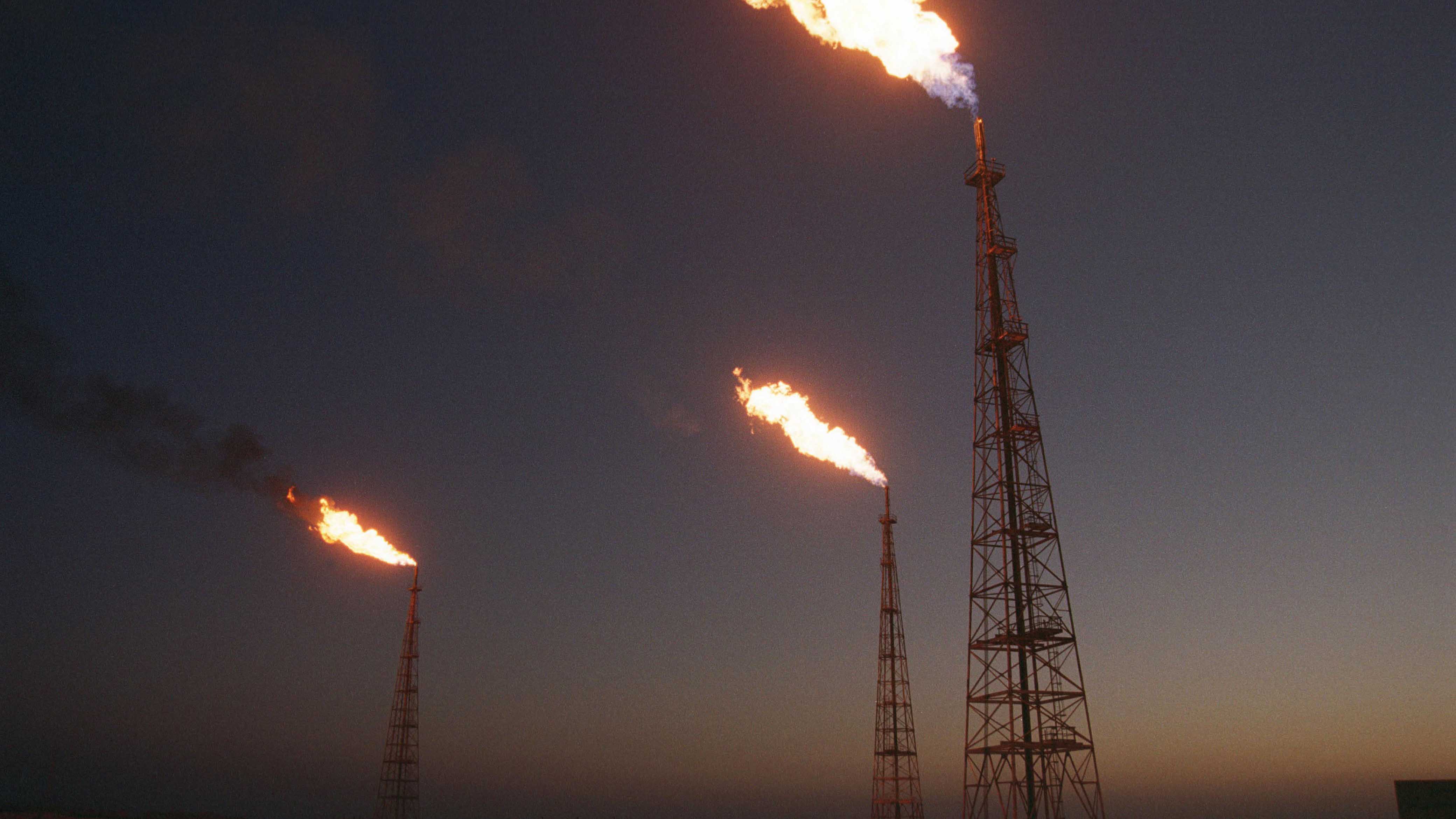
At the heart of the *gas price Iran war* equation lies the Strait of Hormuz. This narrow, 104-mile waterway, offshore of Iran, is not just a geographical feature but the world's most critical oil shipping route. It serves as the main chokepoint connecting the Persian Gulf, a region rich in crude oil, with the Indian Ocean and the broader global energy markets. An astonishing nearly 20 million barrels of oil flow through this strait daily, accounting for roughly one-third of the world’s seaborne oil trade. Major oil producers like Saudi Arabia, Iraq, Iran, Kuwait, and the United Arab Emirates rely on this passage to export their crude. Any disruption, whether from a closure, direct military action, or the planting of mines by a desperate Iran, could immediately remove a significant portion of the global crude supply from the market. This massive gap could not be quickly replaced by other producers, leading to an immediate and dramatic impact on global crude costs. Furthermore, a broader U.S.-Iran conflict could extend its reach to critical oil infrastructure across the region, including refineries, pipelines, and export terminals, amplifying the disruption. The sheer volume of oil at stake through this strategic waterway means that even the credible *risk* of disruption, let alone an actual event, is enough to send global oil markets into a frenzy.
From Oil Fields to Your Wallet: How Iran Tensions Hike Gas Prices
The intricate relationship between Middle Eastern geopolitics and your local gas station might seem distant, but the connection is direct and swift. U.S. gasoline prices closely track global crude costs. This means that instability in key oil-producing regions, particularly those surrounding the Strait of Hormuz, can raise prices at the pump even if local fuel supplies in the U.S. remain unchanged. Energy markets are highly sensitive and move on credible risk, not just confirmed shortages. When traders price in the heightened risk of supply disruptions due to potential *gas price Iran war* scenarios, wholesale fuel costs rise. Gas stations, in turn, must pay more for their next shipment of gasoline, a cost they then pass on to consumers.
A sudden increase in gas prices shows up first at the pump, making routine commuting, errands, and family road trips significantly more expensive. For the average American household, this means a tighter budget and less discretionary spending. But the impact doesn't stop there. Businesses that rely heavily on transportation – from logistics companies and delivery services to local retailers and construction firms – incur higher fuel expenses. These increased operational costs are then often passed along to consumers through elevated delivery fees, service charges, and even higher prices for goods like groceries and everyday commodities. This ripple effect transforms a geopolitical standoff into a tangible economic burden, demonstrating why
Beyond the Pump: How Iran Tensions Raise All Your Costs. The worst-case scenario, as some analysts warn, could see
Iran Conflict Warning: Gas Prices Could Hit $5 Per Gallon, significantly straining household budgets and potentially dampening economic growth.
Beyond the Pump: The Broader Economic Ripple Effect
The consequences of a significant and sustained increase in gas prices, triggered by an Iran conflict, extend far beyond the direct cost of filling your tank. Such an economic shock could lead to widespread inflation, as businesses across various sectors absorb and then pass on their increased transportation and operational costs. This means everything from food and clothing to electronics and services could become more expensive. For consumers, this translates to reduced purchasing power, impacting household budgets and potentially leading to a decrease in consumer spending, a vital engine of the U.S. economy. Small businesses, in particular, could struggle to maintain profitability amidst rising input costs, potentially leading to job cuts or even closures. Moreover, a major oil supply disruption could inject significant uncertainty into global financial markets, deterring investment and potentially leading to broader economic instability. The psychological impact on consumer confidence is also noteworthy; when people anticipate higher costs, they tend to be more cautious with their spending, which can further slow economic activity.
Practical Insights & What It Means for You
Understanding the potential for a *gas price Iran war* to escalate and impact daily life is crucial for preparedness. While geopolitical events are beyond individual control, there are steps consumers can take to mitigate the effects of potential price spikes:
*
Monitor Energy Markets: Stay informed about geopolitical developments in the Middle East, as these directly influence global oil prices.
*
Optimize Fuel Efficiency: Simple measures like regular vehicle maintenance, proper tire inflation, avoiding aggressive driving, and reducing unnecessary weight can improve your car's fuel economy.
*
Plan Your Commute: Consider carpooling, using public transportation, cycling, or walking for shorter distances to reduce fuel consumption.
*
Consolidate Errands: Combine multiple trips into one efficient route to save on gas.
*
Explore Work-from-Home Options: If applicable, leveraging remote work arrangements can significantly cut down on commuting costs.
The situation today is arguably "more alarming" than in previous periods of tension. With diplomatic breakthroughs appearing increasingly remote, and Iran facing an existential battle against internal dissent and international pressure, the likelihood of a desperate lashing out cannot be underestimated. While the "playbook" for Middle East conflicts usually avoids targeting oil infrastructure, a regime "backed into a corner" with nothing to lose might discard convention. As experts warn, if the Supreme Leader decides it's "truly a fight for regime survival," all bets are off, with potential targets including its oil-rich Arab neighbors or blockading the Strait of Hormuz.
Conclusion
President Trump's Iran dilemma encapsulates the profound tension between strategic foreign policy and domestic economic stability. The narrow Strait of Hormuz stands as a testament to the interconnectedness of global energy markets and the fragility of peace. A military confrontation, however limited, risks triggering a rapid and substantial surge in gas prices, sending shockwaves through the U.S. economy and beyond. From the pump to the grocery store, the potential for an Iran conflict to impact everyday costs is immense. While the path to de-escalation appears increasingly difficult, the economic imperative to avoid an unnecessary *gas price Iran war* remains a critical consideration for policymakers navigating this complex and high-stakes geopolitical landscape. The world watches closely as decisions made today could determine the price of tomorrow's energy.